Urban Politics
2017, Urban Investigations, Mapping the Margins, Paris
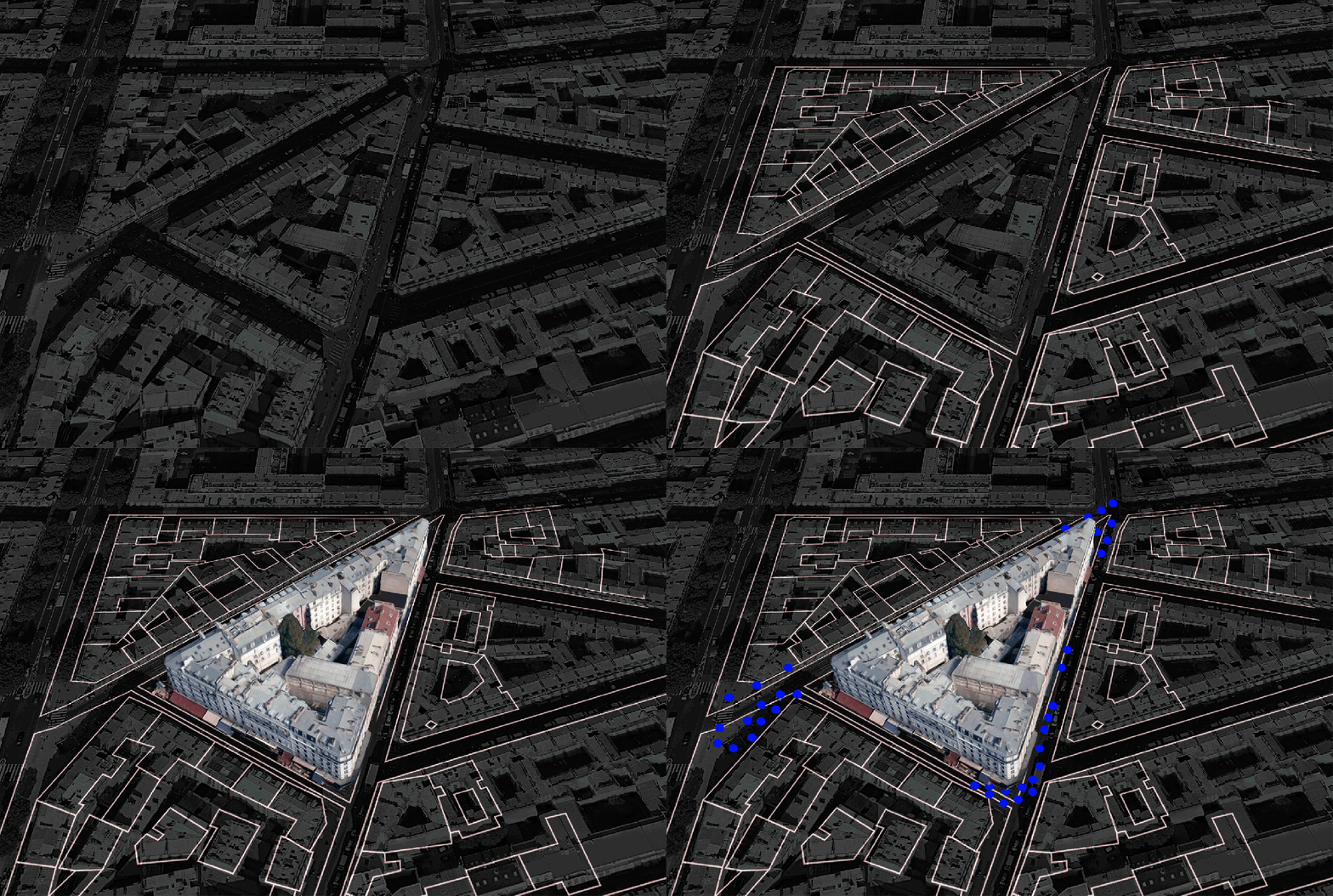
Trough weekly excursions under the supervision of Prof. Timothy Perkins we went into the Parisian Banlieue to explore and observe changes in urban planning from the post war period until today. During our investigations were looking at how current politics and economics shape the physical world and deepening the social divide by layering sameness over diversity and thus promoting the hegemony of French culture. On our discoveries, we identified signs of resistance, responses to the loss of public space and possibilities of occupying space. Civil disobedience. There is a tender regard for the most fragile; the poor, homeless, minorities and those living in shanty towns. An awareness of simplicity and the importance of poverty. To enhance the research, we visited and discussed architectural Utopias of social housing from the 80s by Renée Gailhoustet, Jean Renaudie, Emile Aillaud and Oscar Niemeyer.
Subsequently, each of us created his own narrative by collecting evidences and pictures of textures and surfaces, mosaic facades, brutalist concrete, delicate details. Recognising how the physical environment, even in its smallest elements, has an impact on us.
© Simon Meienberg

© Simon Meienberg


![zirkulieren [t͡sɪʁkuˈliːʁən]](https://simonmeienberg.com/wp-content/uploads/2025/11/cover-zirkulieren-backgrnd.jpg?w=1024)





 Simon Meienberg